


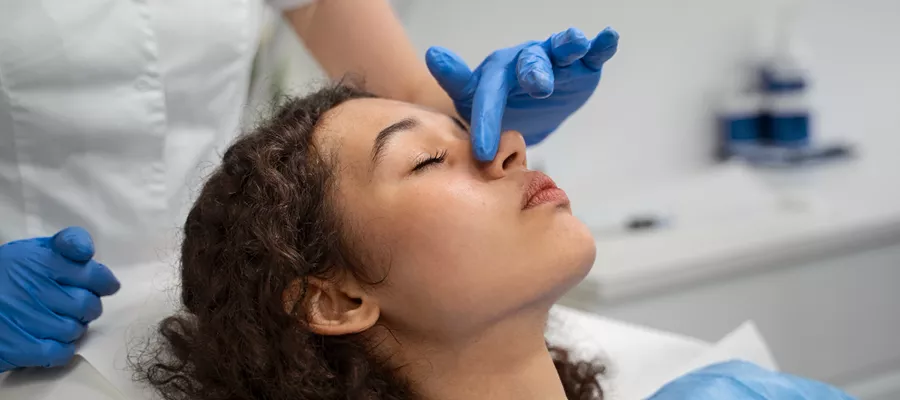
What is Mini Rhinoplasty?
Rhinoplasty is one of the most preferred facial aesthetic procedures. Mini rhinoplasty, on the other hand, is a more limited and targeted version of the classic rhinoplasty procedure. This procedure was developed for situations that don’t require significant changes to the nasal structure, requiring only minor corrections to the tip or the bridge of the nose. Mini rhinoplasty is generally a shorter surgical procedure, requiring less tissue intervention and a faster recovery. It can often be performed with local anesthesia rather than general anesthesia, and the patient can be discharged the same day. The goal of this procedure is to achieve a more aesthetically balanced and harmonious appearance with minor adjustments, without altering the overall anatomy of the nose. Mini rhinoplasty is particularly ideal for individuals seeking to balance facial proportions, correct mild asymmetries, or reshape the nasal tip.
Differences Between Mini Rhinoplasty and Classic Rhinoplasty
While both methods aim for rhinoplasty, they differ significantly in their procedure, scope, and recovery time. Classic rhinoplasty generally involves more extensive procedures targeting the nasal bones, cartilage, and nasal septum. Therefore, it is performed under general anesthesia and requires a longer procedure time. Mini rhinoplasty, on the other hand, focuses on specific areas, primarily by performing limited interventions such as lifting the tip of the nose, reshaping it, or removing small humps.
While traditional rhinoplasty often involves bone cutting, mini rhinoplasty eliminates this need. This contributes to less post-operative bruising and swelling. Furthermore, while nasal packing and plaster are common after traditional rhinoplasty, mini rhinoplasty often eliminates the need for such procedures. Patients can return to their social lives more quickly compared to traditional rhinoplasty. Therefore, mini rhinoplasty is often preferred as a revision for patients who have had previous plastic surgery or who want minor adjustments to their nose.
In Which Situations Is Mini Rhinoplasty Applied?
This procedure is generally suitable for individuals who are satisfied with their nasal shape but require minor aesthetic adjustments. Mini rhinoplasty offers an ideal solution for situations such as a drooping nasal tip, mild asymmetry, a small protrusion on the nasal bridge, or improving the symmetry of the nostrils. It can also be considered for patients who have had previous rhinoplasty and need a minor revision. Mini rhinoplasty yields highly effective results when there are no structural issues, nasal function remains healthy, and overall harmony exists between the individual’s facial features and nasal structure.
Individuals who don’t have serious expectations for rhinoplasty, want to improve their facial aesthetics in a more natural way, and avoid lengthy surgical procedures are suitable candidates. A detailed evaluation by the surgeon determines whether the individual is a candidate for this procedure. If the nose is significantly crooked, deviated, or functionally compromised, mini rhinoplasty may be inadequate, and a traditional rhinoplasty should be considered.
What are the Advantages of Mini Rhinoplasty?
This method stands out with its many advantages. First and foremost, its short procedure time allows patients to return to their daily lives the same day. Being performed under local anesthesia eliminates the risks associated with general anesthesia. The limited surgical intervention allows for a more comfortable recovery. The risk of swelling and bruising is low, and nasal packing, a cast, or bandages are often unnecessary. Furthermore, the return to social life is much shorter than with traditional rhinoplasty.
From an aesthetic perspective, restoring facial balance with small adjustments creates a striking yet natural change in a person’s overall appearance. Mini rhinoplasty preserves the contours of the nose, eliminating the appearance of an artificial appearance. This makes it a particularly important choice for individuals who prefer a natural look. It’s also a more cost-effective option compared to traditional rhinoplasty. The fact that it can be used as a revision surgery makes the procedure more flexible. It can be applied to both first-time rhinoplasty and those who have had previous rhinoplasty, making it suitable for a wide range of patients.
What is the Mini Rhinoplasty Recovery Process Like?
The recovery process after the procedure is quite quick and comfortable. Because the area treated is limited, there is usually mild swelling, which gradually subsides within a few days. Simple measures such as applying ice and sleeping with your head elevated, as recommended by the surgeon, can help control swelling. Mini rhinoplasty generally does not require packing, casting, or stitches. This positively impacts both physical comfort and psychological well-being.
Patients can usually return to their normal social lives the day after surgery. Aside from mild tenderness, pain is minimal and can be controlled with prescription painkillers. While aesthetic changes may take a few weeks to take effect, the initial appearance is immediately noticeable. The longevity of the results is directly related to the individual’s skin type, lifestyle, and overall health. During the recovery period, it is recommended to avoid trauma to the nose, protect yourself from the sun, and limit activities that would put excessive pressure on the nose. At the end of all these processes, a natural, balanced nose that harmonizes with the facial structure is achieved.
Is Mini Rhinoplasty Permanent?
Although this procedure is a small-scale intervention, the results are largely permanent. Because the corrections are generally limited to the position of the nasal tip, the correction of the nasal hump, or the correction of asymmetries in the nostrils, the nose maintains its shape for many years after reshaping. However, as with any surgical procedure, the durability of the results depends on many factors, including the patient’s skin type, aging process, lifestyle, and compliance with the healing process. Since this procedure is not recommended for individuals whose noses have not yet fully developed, the patient’s age is also appropriate for long-term results. To ensure long-term aesthetic results, avoid trauma to the nose after the procedure and adhere to the recommended care routines.
Who is Not Suitable for Mini Rhinoplasty?
Although this procedure is a minor cosmetic procedure, it is not suitable for every individual. Mini rhinoplasty may be inadequate, particularly for patients with significant structural deformities in the nose, functional problems such as deviations, or significant bone curvatures. Furthermore, this procedure may not meet the expectations of individuals who require significant changes to the overall anatomy of the nose or who are expecting a radical aesthetic transformation. Conventional rhinoplasty should be preferred for patients requiring more extensive corrections to the nasal bones. It is also not recommended for young individuals whose noses are still developing. The timing and appropriateness of the surgical intervention are crucial for achieving lasting and satisfactory aesthetic results. Therefore, a detailed examination should be performed before mini rhinoplasty, and the patient’s nose and facial proportions should be accurately evaluated.
Things to Consider After Mini Rhinoplasty
Although the post-procedure recovery period is comfortable, there are some important factors that affect success. No pressure should be applied to the nose in the first few days, and environments with a risk of impact should be avoided. Avoid lying face down, massaging the face, and wearing glasses, especially during the first week. Smoking is recommended to be stopped, as it can negatively impact the healing process. Sun protection is crucial, especially for preventing discoloration around the nose. If skin care products are used, they should always be those recommended by your doctor. Daily routines such as face washing and makeup removal should be performed gently, and harsh scrubbing should be avoided. Although mini rhinoplasty is performed with minimal or nearly seamless procedures, strict adherence to all surgeon recommendations throughout the recovery period is crucial for the longevity of the results.
Mini Rhinoplasty Reviews and Patient Experiences
The majority of individuals who undergo mini rhinoplasty express satisfaction with the changes they achieve in the short time following the procedure. Those who have never had a rhinoplasty before and are hesitant about surgery, in particular, report that this procedure makes them feel more comfortable taking their first step. Small but effective changes, such as correcting a drooping nose tip, smoothing small bony prominences, or eliminating slight asymmetry in the nostrils, can significantly improve a patient’s facial expression. Many patients experience no bruising or swelling after the procedure, finding this procedure highly practical because they can quickly return to their social lives. This natural and understated change in aesthetic appearance is particularly praised by those who are active in their professional lives or prefer not to undergo a lengthy recovery period. Many patients who undergo mini rhinoplasty describe the procedure as a subtle touch that balances their facial features.
How to Choose a Doctor Who Performs Mini Rhinoplasty?
Although rhinoplasty is a minimally invasive procedure, it affects the most prominent area in the center of the face, so surgeon selection is crucial. The surgeon performing mini rhinoplasty must be familiar with nasal anatomy and facial aesthetic proportions. The surgeon’s previous case results, patient feedback, and aesthetic approach should all be considered during the selection process. Surgeons with expertise in rhinoplasty and experience ensure the procedure is both natural and permanent. Not only technical knowledge but also aesthetic considerations are crucial. Because each individual’s facial structure is unique, the procedure must be planned individually. Therefore, it is crucial for the surgeon to thoroughly evaluate the patient, understand their expectations, and deliver a realistic outcome. Furthermore, the technique used, the type of anesthesia preferred for the procedure, and the clinical conditions should all be considered during the decision-making process.
Mini Rhinoplasty Prices 2026
Mini rhinoplasty is generally more cost-effective than traditional rhinoplasty because it involves shorter and more limited interventions. However, costs can vary depending on the surgeon’s experience, the city where the procedure will be performed, the quality of service offered by the clinic, and the technical equipment used. Furthermore, because the scope of the procedure can vary depending on the patient’s nasal structure, pricing is based on individual needs. In some cases, complementary aesthetic procedures such as fillers and Botox may be planned in conjunction with mini rhinoplasty, which may affect the cost. To obtain an accurate price, a preliminary examination and a detailed assessment of the patient’s expectations are essential. Contact us today for mini rhinoplasty pricing.
Is mini rhinoplasty painful?
Because this procedure is performed under local anesthesia, no pain is felt during the procedure. After mini rhinoplasty, most patients describe only mild tenderness or a feeling of pressure around the nose. This is short-lived and temporary and can be controlled with simple painkillers. Due to the limited surgical intervention, the pain level is considerably less compared to traditional rhinoplasty. Most patients report no significant post-procedural pain.
How many hours does mini rhinoplasty take?
The procedure itself lasts between 30 and 60 minutes, depending on the extent of the procedure. While minor reshaping of the tip of the nose may be quicker, minor corrections to multiple areas within the same session may take longer. However, this procedure is generally quicker to complete, allowing the patient to be discharged the same day.
Will there be bruising on the nose after mini rhinoplasty?
The risk of bruising after this procedure is quite low. Because the nasal bones are not manipulated during the procedure, corrections are generally made only to the soft tissues. This minimizes the risk of damage to surrounding tissues. While slight color changes may occur in rare cases, especially in individuals with sensitive skin, the extensive bruising observed after a traditional rhinoplasty is generally not observed with this procedure. Swelling is minimal and resolves on its own within a few days.
Can mini rhinoplasty be performed on everyone?
Like any cosmetic procedure, mini rhinoplasty is planned for individuals who meet specific criteria. This procedure may be inadequate for individuals with large nasal bone deviations, severe deviations, or breathing problems. Similarly, for individuals seeking radical changes to their nasal structure, a traditional rhinoplasty is recommended. Mini rhinoplasty is more suitable for conditions such as a mildly droopy nasal tip, small humps, or symmetry issues. Therefore, a detailed evaluation should be conducted before the procedure, and the specialist should determine whether the individual’s nasal structure aligns with their expectations.
How long does it take to return to work after mini rhinoplasty?
One of the biggest advantages of this procedure is its short and comfortable recovery period. Most patients can return to their daily lives and the office the day after the procedure. While swelling or mild tenderness may persist, this is not enough to interfere with work. For those in jobs that require intense physical exertion, a 2-3 day recovery period may be recommended. However, mini rhinoplasty generally allows for a quicker return to social and professional life, making it a frequently preferred option.